How to Choose the Best Mortise Door Lock: Complete Buying Guide (2026)
Imagine This…
You’ve just invested in a beautiful new main door for your dream home. The wood finish is premium, the handles look elegant, and everything feels perfect. But there’s one question that most homeowners overlook:
“Is my door lock strong enough to protect my family?”
A door is only as secure as the lock installed inside it. Unfortunately, many people spend thousands on doors while choosing a lock based only on price or appearance. The result? Poor security, frequent lock failures, expensive replacements, and sleepless nights.
This is where a mortise door lock makes a difference.
Known for its durability, smooth operation, and high level of security, a mortise lock has become one of the most trusted locking systems for modern homes, apartments, offices, hotels, and commercial buildings. Whether you’re building a new home or upgrading an existing door, choosing the right mortise lock is an investment in both safety and peace of mind.
In this complete buying guide, you’ll learn everything you need to know—from understanding how a mortise lock works to comparing different types, selecting the right model for your door, and avoiding costly buying mistakes.
Let’s get started.
What Is a Mortise Door Lock?
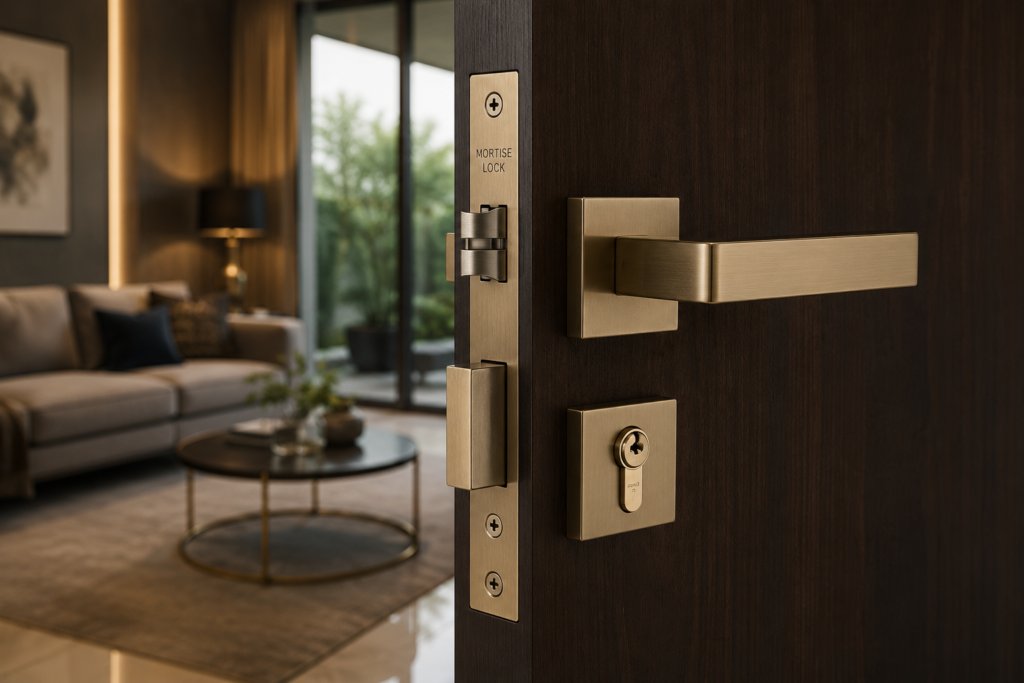
A mortise door lock is a locking system that fits inside a specially cut pocket, known as a mortise, within the edge of a door. Unlike surface-mounted locks, the lock body is concealed inside the door, making it stronger, more secure, and visually cleaner.
A standard mortise door lock usually includes:
- Lock Body
- Cylinder or Key Mechanism
- Latch Bolt
- Deadbolt
- Strike Plate
- Handle or Lever Set
Because the mechanism is embedded inside the door, mortise locks provide better resistance against forced entry compared to many standard cylindrical locks.
Today, mortise door locks are widely used in:
- Main Entrance Doors
- Wooden Doors
- Metal Doors
- Commercial Buildings
- Hotels
- Premium Apartments
- Office Cabins
Why Are Mortise Door Locks So Popular?
If you ask an architect or interior designer to recommend a lock for a premium entrance door, chances are they’ll suggest a mortise door lock.
Here’s why.
Superior Security
A mortise lock is designed with a deep locking mechanism that sits securely inside the door. Combined with a deadbolt, it offers excellent resistance against tampering, prying, and forced entry.
For homeowners looking for reliable security, a quality mortise lock is one of the safest choices available.
Long-Term Durability
Unlike basic locks that may wear out after years of frequent use, a premium mortise door lock is built to withstand thousands of locking cycles.
Most high-quality models use durable materials such as:
- Stainless Steel
- Brass
- Zinc Alloy
- Hardened Steel
These materials resist corrosion, maintain smooth operation, and deliver long-lasting performance.
Elegant Appearance
Since the lock body is concealed inside the door, only the handle, cylinder, and keyhole remain visible.
This creates a cleaner, more sophisticated appearance that complements modern and premium interiors.
Smooth Daily Operation
One of the biggest advantages of a well-made mortise lock is its smooth operation.
The latch and deadbolt engage precisely with the strike plate, allowing effortless locking and unlocking without excessive force.
Key Components of a Mortise Door Lock
Understanding the parts of a mortise lock helps you make a smarter buying decision.
Lock Body
This is the main mechanism installed inside the door. It houses all internal moving parts responsible for locking and unlocking.
Cylinder
The cylinder is where the key is inserted. Rotating the key activates the locking mechanism.
Some premium models also support digital cylinders or smart access systems.
Latch Bolt
The latch bolt keeps the door closed during normal use and retracts when the handle is operated.
Deadbolt
The deadbolt provides the primary security by extending deep into the door frame when locked.
Compared to a standard latch, the deadbolt offers significantly greater protection against forced entry.
Strike Plate
Installed on the door frame, the strike plate receives the latch and deadbolt, ensuring proper alignment and secure locking.
Handle or Lever
The handle or lever allows easy operation of the latch while enhancing the overall aesthetics of the door.
Types of Mortise Door Locks
Choosing the right type depends on how and where the lock will be used.
1. Sash Mortise Lock
A sash mortise lock combines a latch and a deadbolt in one mechanism, making it one of the most common options for residential entrance doors.
Best For
- Main Doors
- Bedroom Doors
- Apartments
- Homes
Advantages
✔ Easy to operate
✔ High security
✔ Clean appearance
2. Deadlock Mortise Lock
Unlike a sash lock, a deadlock contains only a deadbolt and is operated exclusively using a key.
Best For
- Commercial Properties
- High-Security Areas
- External Doors
Advantages
✔ Enhanced protection
✔ Strong resistance against forced entry
✔ Excellent for exterior doors
3. Bathroom Mortise Lock
These locks are designed primarily for privacy rather than security.
Most models include an emergency release function that can be operated from outside when necessary.
Best For
- Bathrooms
- Powder Rooms
- Guest Washrooms
4. Smart Mortise Lock
Modern smart mortise locks combine traditional mechanical strength with digital convenience.
Common features include:
- Fingerprint Unlock
- PIN Code Access
- RFID Card
- Mobile App Control
- Temporary Guest Access
- Remote Monitoring
Best For
- Luxury Homes
- Villas
- Premium Apartments
- Smart Offices
Why Door Material Matters
Many buyers focus only on the lock itself and forget about the type of door.
Choosing a mortise lock that’s compatible with your door material ensures proper installation, smooth operation, and long-term reliability.
For example:
- Wooden doors can accommodate most standard mortise lock sizes and handle sets.
- Steel doors often require heavy-duty mortise locks designed for metal applications.
- Fire-rated doors should use certified mortise locks that comply with fire safety requirements.
- Premium entrance doors benefit from high-security mortise locks with hardened deadbolts and anti-pick cylinders.
Selecting the correct combination of door and lock improves both safety and performance.
Mortise Door Lock vs Cylindrical Lock
One of the most common questions homeowners ask is whether they should choose a mortise door lock or a cylindrical lock. While both are widely used, they differ in terms of construction, security, durability, and applications.
Here’s a quick comparison to help you understand the difference.
Feature | Mortise Door Lock | Cylindrical Lock |
Security | ⭐⭐⭐⭐⭐ | ⭐⭐⭐ |
Durability | Excellent | Good |
Installation | More Complex | Easier |
Best For | Main Doors, Offices, Hotels | Interior Doors |
Lifespan | Long | Moderate |
Appearance | Premium & Elegant | Standard |
Cost | Higher | Budget-Friendly |
Expert Insight
If you’re looking for a lock for your main entrance door, a mortise door lock is generally the better choice due to its stronger construction and enhanced security. Cylindrical locks are more suitable for internal doors where heavy-duty protection isn’t required.
Single Cylinder vs Double Cylinder Mortise Lock
Another important decision is selecting the right cylinder type.
Single Cylinder Mortise Lock
A single cylinder lock uses a key on the outside and a thumb turn on the inside.
Best For
- Residential Homes
- Apartments
- Villas
- Office Cabins
Advantages
- Convenient operation
- Faster emergency exit
- Easy to lock from inside
Double Cylinder Mortise Lock
A double cylinder lock requires a key from both sides.
Best For
- Glass Doors
- Commercial Entrances
- High-Security Areas
Advantages
- Higher resistance to unauthorized access
- Better protection where glass panels are present
Important Note
Double-cylinder locks provide extra security, but ensure they comply with your local fire safety regulations so occupants can exit quickly during emergencies.
How to Choose the Best Mortise Door Lock
Buying the right mortise lock isn’t just about selecting a well-known brand. The right lock should match your door, usage, and security requirements.
1. Consider the Door Material
Different doors require different mortise lock specifications.
- Wooden Doors – Standard mortise locks with lever handles work well.
- Steel Doors – Heavy-duty mortise locks designed for metal doors are recommended.
- Fire-Rated Doors – Use certified mortise locks approved for fire doors.
- Premium Entrance Doors – Consider high-security mortise locks with anti-pick and anti-drill features.
Choosing the correct lock for your door material improves both safety and long-term performance.
2. Evaluate Your Security Needs
Ask yourself:
- Is this the main entrance?
- Is the property located in a high-traffic area?
- Is it a residential or commercial property?
- Do you need additional security for valuables?
Higher-risk areas should use premium mortise locks with advanced security features.
3. Choose the Right Lock Material
The quality of the lock body directly affects durability.
Common materials include:
- Stainless Steel
- Brass
- Zinc Alloy
- Hardened Steel
For long-lasting performance, select corrosion-resistant materials that can withstand frequent use.
4. Select the Right Handle
Many homeowners purchase the lock body first and only later think about the handle.
Instead, choose a handle that complements:
- Door Design
- Interior Style
- Finish
- Daily Comfort
Popular finishes include:
- Matte Black
- Satin Steel
- Antique Brass
- Rose Gold
- Chrome
- Graphite Grey
A matching handle enhances the appearance of your entrance while maintaining a consistent design theme.
5. Check the Lock Size
Not all mortise locks fit every door.
Before purchasing, verify:
- Door Thickness
- Backset
- Centre Distance
- Lock Body Size
Incorrect sizing may require expensive modifications during installation.
Best Mortise Door Lock for Different Applications
The best mortise lock depends on where it will be installed.
Main Entrance Door
Choose a heavy-duty mortise lock with a strong deadbolt and premium cylinder for maximum security.
Bedroom Door
A standard sash mortise lock provides the right balance of security and convenience.
Office Door
Select a durable mortise lock with a lever handle for smooth operation and long-term reliability.
Hotel Rooms
Hotels often use smart mortise locks with RFID cards, PIN codes, or digital access for enhanced convenience and security.
Commercial Buildings
Heavy-duty mortise locks with certified security ratings are ideal for offices, retail spaces, and commercial entrances.
Mortise Lock with Handle vs Without Handle
Many buyers are unsure whether to purchase a complete mortise lock set or buy the handle separately.
Feature | Mortise Lock with Handle | Lock Body Only |
Convenience | Excellent | Moderate |
Installation | Easier | Depends on Existing Handle |
Appearance | Matching Finish | Customizable |
Best For | New Installations | Lock Replacement |
Expert Recommendation
If you’re installing a new door, choosing a mortise lock with handle ensures compatibility and creates a cleaner, more premium look.
Mortise Door Lock Buying Checklist
Before purchasing, review this checklist:
✅ Door Material
✅ Door Thickness
✅ Lock Size
✅ Backset Measurement
✅ Handle Compatibility
✅ Security Level
✅ Fire Rating (if required)
✅ Corrosion Resistance
✅ Warranty
✅ Trusted Brand
Taking a few minutes to verify these details can save both time and installation costs.
Expert Tips from NG MITRA
At NG MITRA, we’ve helped homeowners, architects, interior designers, and contractors select the right architectural hardware for a wide range of projects.
Here are a few practical recommendations:
- Choose certified mortise locks for your main entrance instead of basic locks.
- Match the lock finish with your door handles, hinges, and hardware for a premium appearance.
- Avoid low-quality products made from lightweight materials.
- If your home is in a coastal or humid region, choose corrosion-resistant finishes.
- For premium homes, consider upgrading to a smart mortise lock that combines mechanical strength with modern access control.
Common Mistakes to Avoid When Buying a Mortise Door Lock
A premium-looking lock doesn’t always guarantee premium security. Many homeowners choose a mortise door lock based only on price or design and later face installation issues, poor durability, or inadequate security.
Avoid these common mistakes before making your purchase.
1. Buying the Wrong Lock Size
Not every mortise door lock fits every door. Purchasing a lock without checking the door thickness, backset, or centre distance can lead to expensive modifications during installation.
Tip: Always verify your door measurements before ordering a lock.
2. Choosing Price Over Quality
A low-cost lock may save money initially, but poor-quality internal components often wear out quickly, leading to frequent repairs or complete replacement.
Investing in a reliable mortise lock from a trusted brand provides better security and long-term value.
3. Ignoring Door Material
A mortise lock suitable for a wooden door may not be ideal for a steel or fire-rated door.
Always select a lock specifically designed for your door type.
4. Ignoring Security Ratings
If the lock is being installed on a main entrance, don’t compromise on security.
Look for features such as:
- Anti-pick mechanism
- Anti-drill protection
- Hardened deadbolt
- Corrosion-resistant body
5. Forgetting About Finish
Many homeowners install premium door handles but choose a lock with a completely different finish.
For a premium appearance, match the finish of your:
- Door Handle
- Hinges
- Door Stopper
- Mortise Lock
- Door Accessories
A coordinated finish creates a cleaner and more professional look.
How to Maintain a Mortise Door Lock
Even the best mortise door lock requires regular maintenance to ensure smooth performance and long-term durability.
Here are a few simple maintenance tips:
Clean the Lock Regularly
Dust and dirt can affect the movement of internal components. Wipe the handle and lock faceplate using a soft, dry cloth.
Lubricate the Mechanism
Use a silicone-based lubricant occasionally to keep the latch and deadbolt operating smoothly.
Avoid heavy oil, as it attracts dust and may reduce performance over time.
Tighten Loose Screws
Frequent use may loosen screws on the handle or faceplate. Inspect and tighten them periodically to maintain proper alignment.
Protect Against Moisture
In humid environments or coastal areas, choose corrosion-resistant mortise locks and wipe away excess moisture whenever possible.
Replace Damaged Components
If the key becomes difficult to turn, the latch sticks, or the lock no longer aligns correctly, replace worn components before they fail completely.
Preventive maintenance is always more cost-effective than emergency replacement.
Frequently Asked Questions (FAQs)
What is a mortise door lock?
A mortise door lock is a locking mechanism installed inside a rectangular pocket cut into the edge of a door. It combines high security, durability, and a clean appearance, making it a popular choice for residential and commercial properties.
Are mortise locks better than cylindrical locks?
Yes, in most cases. Mortise locks generally offer stronger construction, better durability, and higher resistance to forced entry, making them an excellent choice for main entrance doors and commercial buildings.
Which mortise door lock is best for a main door?
For a main entrance, choose a high-quality mortise lock with a hardened deadbolt, durable cylinder, and corrosion-resistant construction. Selecting a trusted brand and ensuring proper installation are equally important.
Can a mortise lock be installed on an existing door?
Yes, provided the door has enough thickness to accommodate the lock body. Existing doors can often be upgraded with a compatible mortise lock by a professional installer.
How long does a mortise door lock last?
A premium mortise lock can last for many years with proper installation and regular maintenance. Durability depends on the quality of materials, frequency of use, and environmental conditions.
What should I check before buying a mortise door lock?
Before purchasing, consider:
- Door thickness
- Door material
- Lock size
- Security level
- Handle compatibility
- Finish
- Brand reputation
- Warranty
- Installation requirements
Final Thoughts
Your main door is the first line of defense for your home or business, and the lock you choose plays a crucial role in ensuring security, convenience, and peace of mind.
A mortise door lock is more than just a locking mechanism. It is a long-term investment that offers superior strength, smooth operation, and a premium appearance. By selecting the right lock based on your door type, security needs, and daily usage, you can significantly improve both safety and functionality.
Instead of choosing a lock based only on price, focus on quality, compatibility, and long-term reliability. A well-selected mortise lock can protect your property for years while enhancing the overall look of your entrance.
Why Choose NG MITRA?
At NG MITRA, we believe quality architectural hardware should combine security, durability, and elegant design.
Whether you’re a homeowner, architect, interior designer, contractor, or hardware dealer, we offer premium hardware solutions that meet modern residential and commercial requirements.
Why Customers Trust NG MITRA
✔ Premium Architectural Hardware
✔ High-Quality Mortise Door Locks
✔ Door Handles & Lock Sets
✔ Digital Locks & Smart Lock Solutions
✔ Expert Product Guidance
✔ Trusted Brands
✔ Reliable Customer Support
From a single home renovation to large commercial projects, our team helps you choose the right hardware with confidence.
Explore Premium Mortise Door Locks
Looking for the right mortise door lock for your project?
Explore NG MITRA’s collection of premium mortise locks, door handles, digital locks, hinges, cabinet hardware, and architectural hardware designed for homes, offices, hotels, and commercial spaces.
🌐 Website: https://www.ngmitra.com
📞 Call / WhatsApp: +91 9147019476